My part
Mapped provider states into one order model and built the founder dashboard, internal queue, and integrations with Kotlin/Spring Boot and PostgreSQL.
Full-stack product / co-founder
A Spanish-first company-operations product combining a customer dashboard, an internal operations queue, and 6+ connected services.
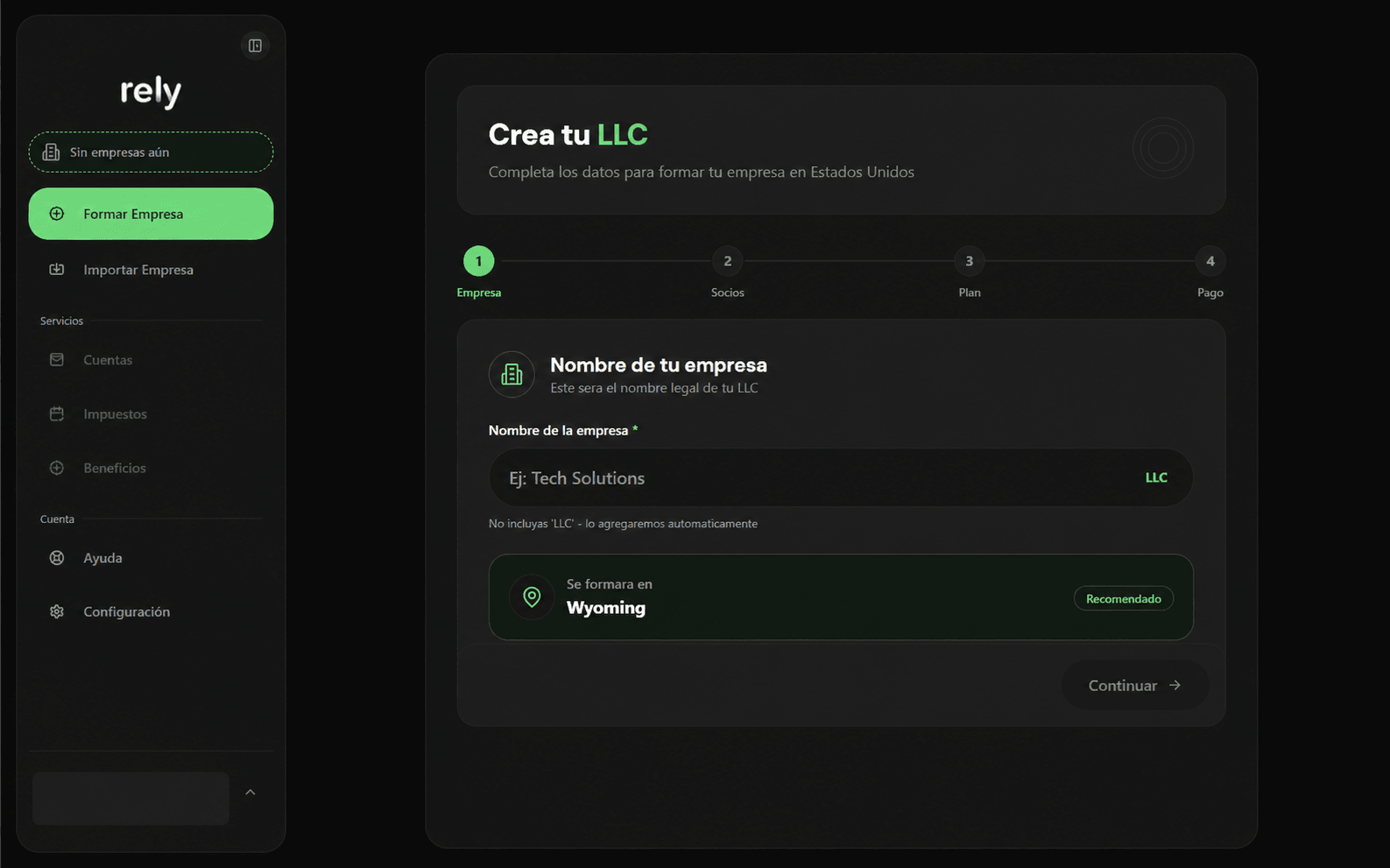
Mapped provider states into one order model and built the founder dashboard, internal queue, and integrations with Kotlin/Spring Boot and PostgreSQL.
Combine provider updates into clear customer actions while preserving the operational checks needed before filings, payments, and other sensitive changes.
The public rely.business site, plus real dashboard and pricing screens with personal data removed.
Synthetic walkthrough
Follow one order in three steps: what the founder sees, the action they need to take, and how operations picks it up.
Illustrative reconstruction with synthetic data. This is not an original Rely screen or an exact replica.
Next step: upload proof of address
A formation order moves through filings, banking, documents, payments, deadlines, and support. Each provider reports state differently. Founders need a useful answer to one question: what happens next?
I designed the shared state model, founder dashboard, and internal queue. Customers see progress and required actions. Operators see ownership, provider state, documents, exceptions, and the context needed to act.
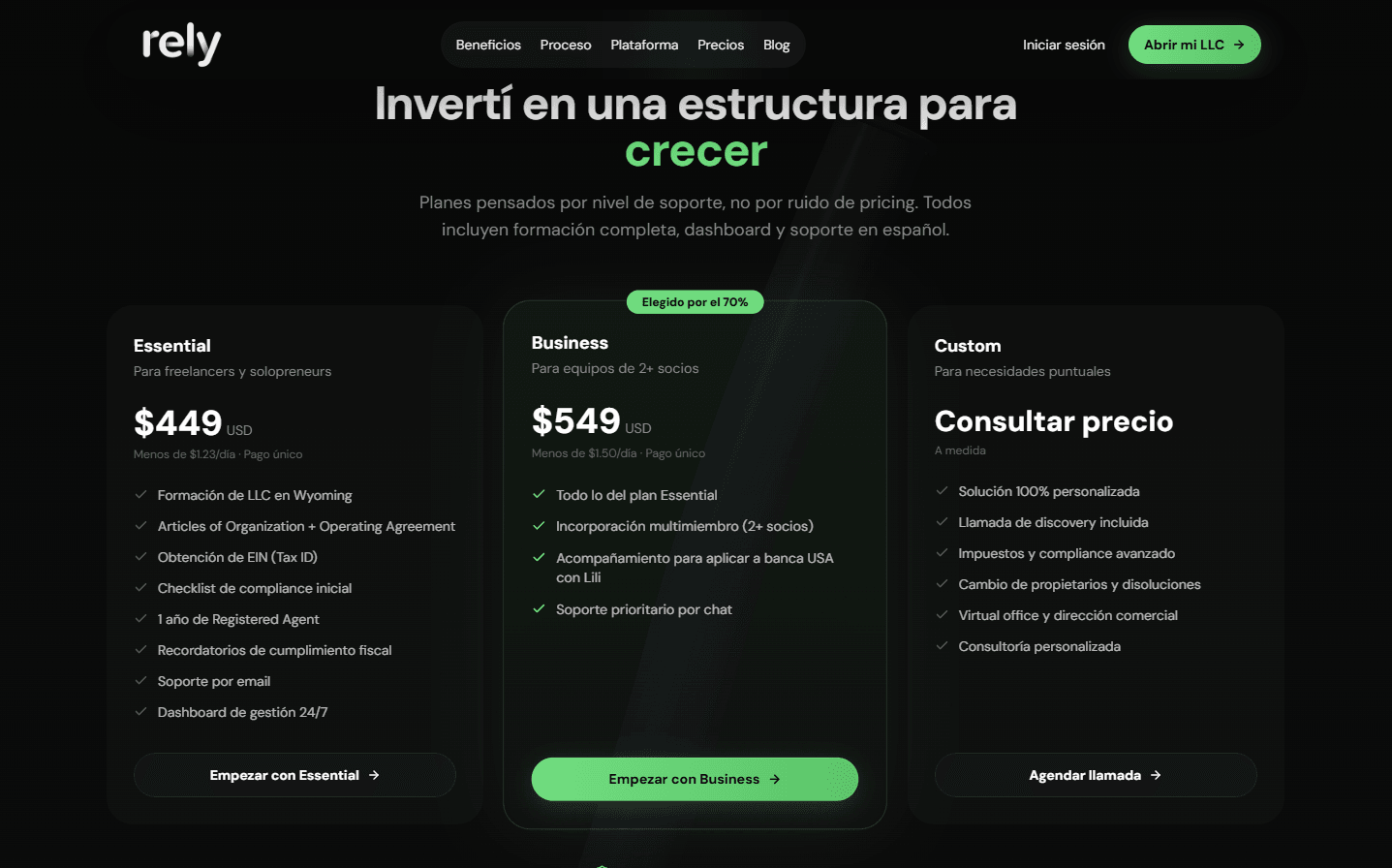
The shared order connects customer context, missing documents, provider state, and required actions. Sensitive changes stay behind explicit approval.
The frontend and admin tools connect to Kotlin and Spring Boot services, PostgreSQL, Auth0, Stripe, document storage, formation providers, and 6+ connected services.

Around 40 companies have passed through the founder dashboard. In production, a founder can create a company and receive the EIN and formation documents through an automated flow, while registry approvals and payments keep their own checks. Operators work from a shared queue with provider state, documents, and visible approval boundaries.